
How Can I Evaluate New-Arrival Clothing Online Before Buying?
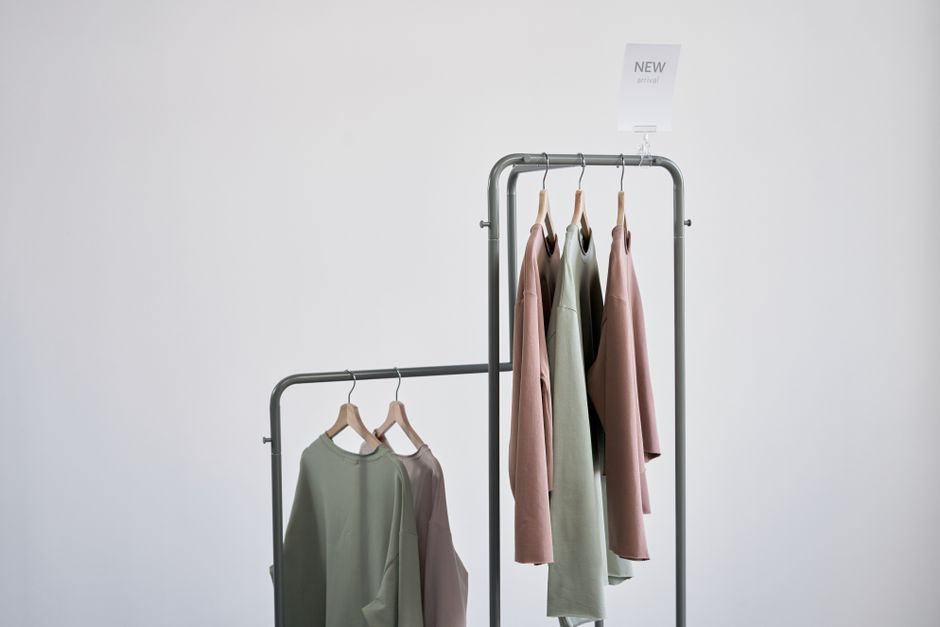
Evaluate a new arrival by reading the item-specific size chart, fiber percentages, lining and care details before trusting the photos. Then test whether it makes outfits with clothes you own, and read the return terms before payment. A garment with clear facts and a low-cost exit path is a safer buy than one with flattering images alone.
Photos sell a shape. Product details tell you what arrives.
How do I know whether a new-arrivals item will look like its photos?
Use the photos to study the garment, then use the description to test the picture. Look for front, back, and close-up views; the listed length; the model's stated size; and an item-specific measurement chart. A single posed image leaves too much unseen.
Fit is not a minor detail. The National Institute of Standards and Technology identifies anthropometric data and apparel sizing as core parts of apparel quality, because a garment cannot meet its purpose if it does not fit the intended wearer satisfactorily. Compare your bust, waist, hip, inseam, or other relevant measurements with the garment chart. Do not translate your usual size across brands by instinct.
Read the description for construction clues the photo cannot settle. Does it state whether the garment is lined? Does it give a length? Does it say where a seam, waistband, or closure sits? Missing details do not prove poor quality. They do leave the buyer with less evidence.
Virtual fit guidance deserves weight when a retailer provides it. A peer-reviewed field experiment in Manufacturing & Service Operations Management found that virtual fit information reduced costs tied to returns and ordering multiple sizes for home try-on. It does not replace a chart. It gives the chart another layer of context.
| Page signal | What to check | Decision use |
|---|---|---|
| Photos | More than one angle and close views of fabric and closures | Use images to inspect shape and construction, not to guess measurements. |
| Fit information | Garment chart, model size, and virtual fit guidance if available | Match the chart to your body measurements. |
| Description | Length, lining, closures, stretch claims, and care | Flag what remains unstated before ordering. |
| Reviews | Specific fit details from identifiable review contexts | Read beyond the star average. |
| Return terms | Window, return shipping, restocking fee, and final-sale status | Know the cost of being wrong before paying. |
Reviews are evidence, not a verdict. The Federal Trade Commission's consumer guidance advises shoppers to read reviews across several sources and examine where a review appears, who wrote it, and the reviewer's history. A short review saying "love it" tells little. A review that states the ordered size and describes a fit issue gives you something to compare.
Which fabric details should I check before ordering clothes online?
Check the full fiber breakdown, the lining, and the care instructions before ordering. Those three details tell you more about the fabric than a broad label such as soft, premium, or textured.
The FTC says covered textile and wool products must disclose generic fiber names and percentages by weight in descending order of predominance. That means the first fiber listed carries the largest share of the fabric. Read the whole sequence, not only the first word. A product page that names or implies a fiber should provide the required fiber-content information.
The same rule gives a simple comparison method. Put two similar new arrivals side by side and compare their listed fibers, whether either is lined, and how each must be cleaned. The EU textile-labeling regulation also requires fiber composition to be clearly visible before an electronic purchase. A vague material label blocks a clean comparison.
Care is part of the purchase, not an afterthought. FTC care-label rules require regular-care instructions for textile apparel offered for sale. If the item asks for a care routine that does not fit your habits, the price is not the only cost. Fabric care and long-term wear belong in the same thought, as they do when choosing how to remove persistent sweat odor from activewear without rewashing it.
One rule holds. The fiber list describes content; it does not settle feel, drape, thickness, or durability on its own. Public labeling data does not cover every sensory or construction detail. Treat a full label as necessary evidence, then use close photos, reviews, and the return policy to cover what the label cannot tell you.
How can I tell if a trend piece will work with clothes I already own?
Make the item earn three outfits before you buy it. Pair it on screen with clothes you already own: one ordinary outfit, one weather-appropriate outfit, and one version for the place you expect to wear it. If each outfit needs another purchase, the new arrival is not solving a wardrobe problem.
Start with the parts that set limits: color, silhouette, length, and care. A striking piece can still be useful if it works with your existing shoes, layers, and bags. A quiet piece can still sit unused if its cut fights every jacket or trouser you own.
Then use a plain cost-per-wear test. Divide the listed price by the number of wears you can name now. This is not a promise about the future. It is a way to expose whether the garment has a place in the life you already have. Many imagined outfits are not the same as three real ones.
Return risk belongs in this decision. The FTC says sellers must state whether an item can be returned for a full refund, and shoppers should check return shipping costs, the return window, and restocking fees before purchase. Discounted and clearance goods can follow different rules, so a marked-down new arrival needs a second look at the policy.
Read the policy before the confirmation screen, not after the package arrives. The National Retail Federation reported that retailers expected 16.9% of annual sales to be returned in 2024, totaling a projected $890 billion. In the same consumer survey, 76% said free returns were a key factor in where they shopped. The return path changes the real price of uncertainty.
A good new-arrivals page reduces guesswork. A good purchase reduces regret. The two are not the same.
Frequently Asked Questions
Why do clothing sizes vary so much between brands?
Size labels are not a shared measuring system across brands. NIST identifies fit as a core part of apparel quality and notes that sizing relies on body-measurement data and requirements that differ among wearer groups. Compare your measurements with each brand's chart instead of treating a familiar size as proof.
What should I look for in reviews before buying a newly released item?
Look for reviews that name the reviewer's fit context, the size ordered, and details such as length, fabric feel, opacity, or care after use. The FTC advises checking reviews across several sources and assessing where the review appears, who wrote it, and the reviewer's history rather than relying on stars alone. New releases often have few reviews, so the product page and return terms carry more weight.
How do I avoid buying new arrivals that I will never wear?
Build three outfits from clothes you already own before ordering. If the item needs a separate purchase to make each outfit work, leave it behind. A new arrival earns space when it solves an existing outfit problem, not when it creates three new ones.
Sources
- Federal Trade Commission Consumer Advice: Online Shopping
- Federal Trade Commission: Textile and Wool Labeling Requirements
- Federal Trade Commission: Care Labeling Rule
- National Institute of Standards and Technology: Apparel Sizing and Anthropometric Data
- Manufacturing & Service Operations Management: Virtual Fit Information Study
- National Retail Federation: 2024 Retail Returns Report
- EUR-Lex: EU Textile Fibre Names and Labeling Regulation